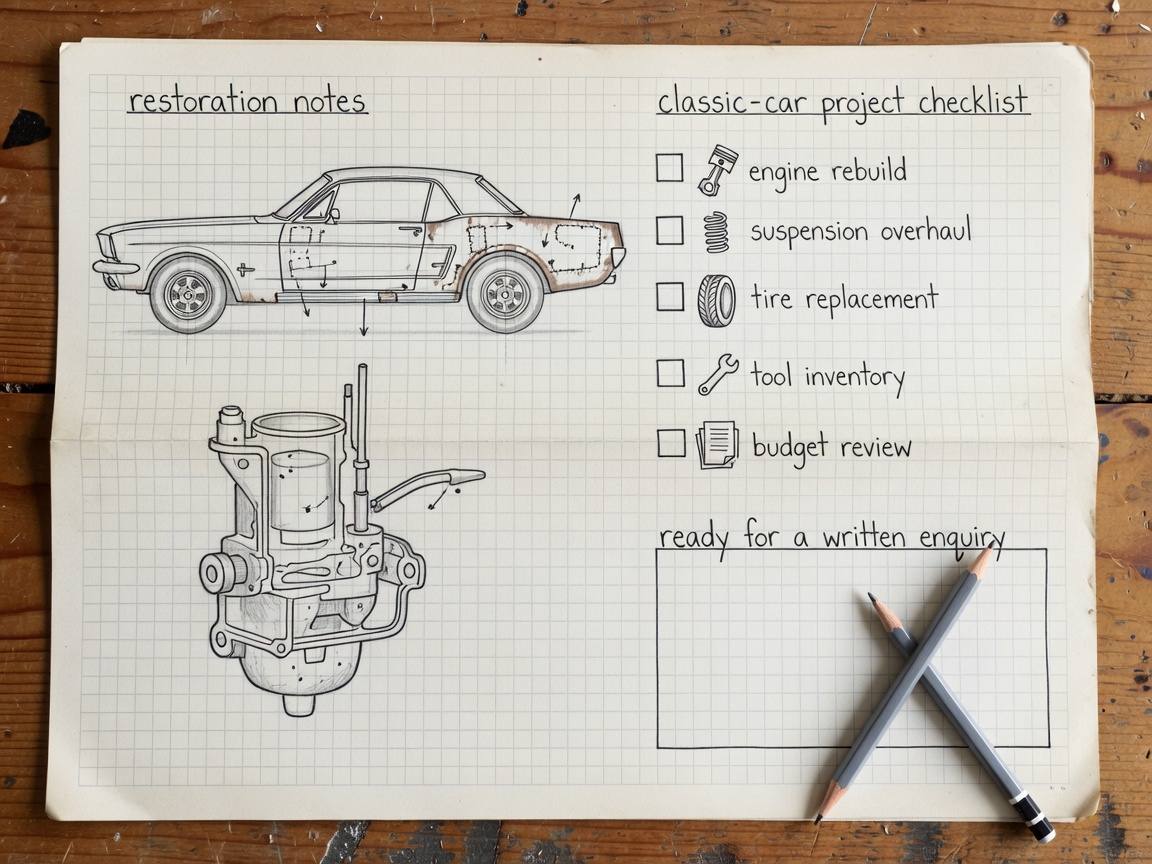
What should I do before dismantling a classic car?
Photograph all sides, the cabin, engine bay, boot and underside; identify parts and documents; note what works and what has not been tested. Label components and record their locations as they come off. See the assessment guide.
How can I set a realistic project scope?
Start with the vehicle’s intended use, condition, completeness, storage and your available skills, time and funds. Mark unknowns and request inspections or estimates for them. Keep a provisional scope and revise it when evidence changes.
Can I know the total cost before work begins?
Not reliably before the car has been inspected. Hidden corrosion, prior repairs, parts supply and specialist labour can alter the plan. Ask for itemised estimates, the assumptions behind them and a process for approving additional work.
Should I restore a car to original specification?
There is no answer that fits every vehicle. Consider its history, condition, intended use, available evidence and parts. Record any departure from the specification and the reason so future owners can understand the decision.
Is surface rust always a structural problem?
Appearance alone cannot establish the extent of corrosion. Seams and covered areas may need closer inspection. Have uncertain structural areas examined by an experienced body specialist before deciding on repairs.
Can I drive a car that starts after storage?
A successful start does not show that brakes, steering, tyres, suspension, fuel system or other safety-critical components are ready. Arrange appropriate inspection and meet applicable local requirements before public-road use.
Which jobs should I leave to a specialist?
That depends on your training, tools and the vehicle. Structural repair, welding, brakes, steering, electrical faults and engine work may require specialist knowledge and equipment. Pause whenever a safety-critical method or result is uncertain.
How should I store removed parts?
Label each item with the vehicle and location, keep related fasteners together, photograph assemblies before removal and store delicate parts in clean, dry conditions. Maintain a separate inventory and back up digital records.
When is the restoration finished?
Completion depends on the agreed scope and intended use. Document outstanding items, verify relevant systems and meet applicable inspection requirements. Keep a maintenance record; restoration does not remove the need for ongoing checks.
Where do I begin if the history is incomplete?
Record what is verifiable and explicitly mark gaps. Gather physical identifiers, photographs, invoices and reliable model references. Avoid treating hearsay as fact; seek marque-specific advice if identity or specification is uncertain.