Inspect with the car stationary
Review visible work, fluid condition, fasteners and leaks using safe methods and the appropriate service information.
A polished finish is one part of the result. Plan checks for fit, operation, safety and maintenance, and be prepared to resolve issues before the car is used as intended.
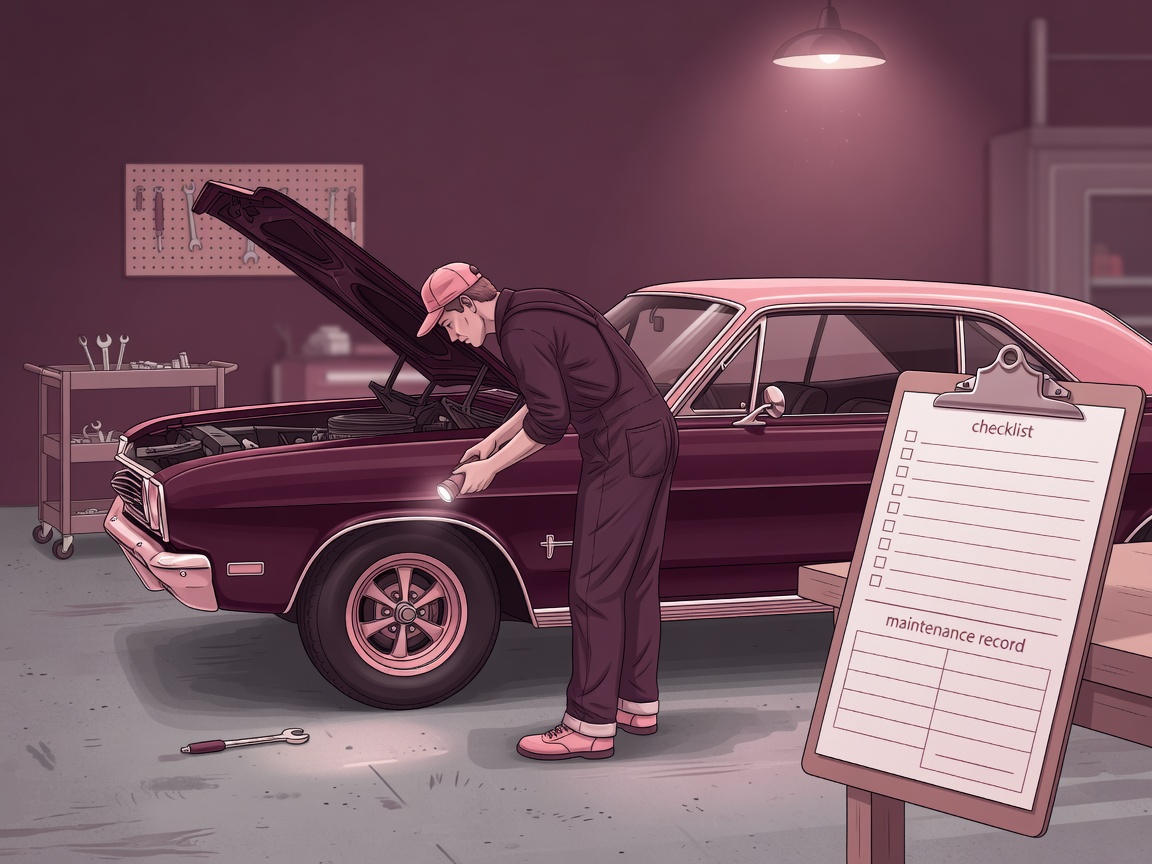
There is no single test sequence suitable for every classic car or every jurisdiction. Follow the vehicle’s service information, applicable inspection and road-use requirements, and advice from qualified professionals. This guide helps organize questions and records; it does not certify a vehicle.
Before final paint or interior installation, check that body repairs, panel alignment, sealing and corrosion protection are documented. Confirm that trim, lamps, glass, closures and weather seals fit the agreed specification. Store finish and material records with the project file so later repairs can be matched responsibly.
Interior work should not conceal unresolved wiring, leaks or access requirements. Check that controls move freely, labels are legible and any changes from the original configuration have been recorded. If a modification affects safety or compliance, obtain suitable professional guidance.
Review visible work, fluid condition, fasteners and leaks using safe methods and the appropriate service information.
Have braking, steering, suspension, lights, electrical operation and other relevant systems checked by competent people.
Clarify registration, inspection, insurance and road-use requirements that apply to this vehicle and location.
After appropriate approval for use, keep notes of changes and arrange follow-up checks as advised.
A vehicle’s legal status, insurance and mechanical condition must be addressed before public-road use. Where a formal inspection or professional sign-off is required, complete it. Do not treat a short run around a workshop or a successful engine start as a substitute for checks of safety-critical systems.
Keep a post-work list even when the car appears finished. Recheck items as directed by the manufacturer or the specialist responsible for the work. Document unusual sounds, fluid loss, handling changes or electrical behaviour and stop using the vehicle if a safety concern arises.
Save the final specification, photographs, invoices, parts details and inspection outcomes together. The next owner, mechanic or restorer will benefit from knowing what was done, by whom and when. Good records turn the finished car into a better-understood car.
Cookies on this site We use necessary cookies to run the site and, with your consent, optional ones to measure visits. You can change this at any time. Read more